Money & policy
When Will Plug In Solar Panels Be Available To Buy In The Uk
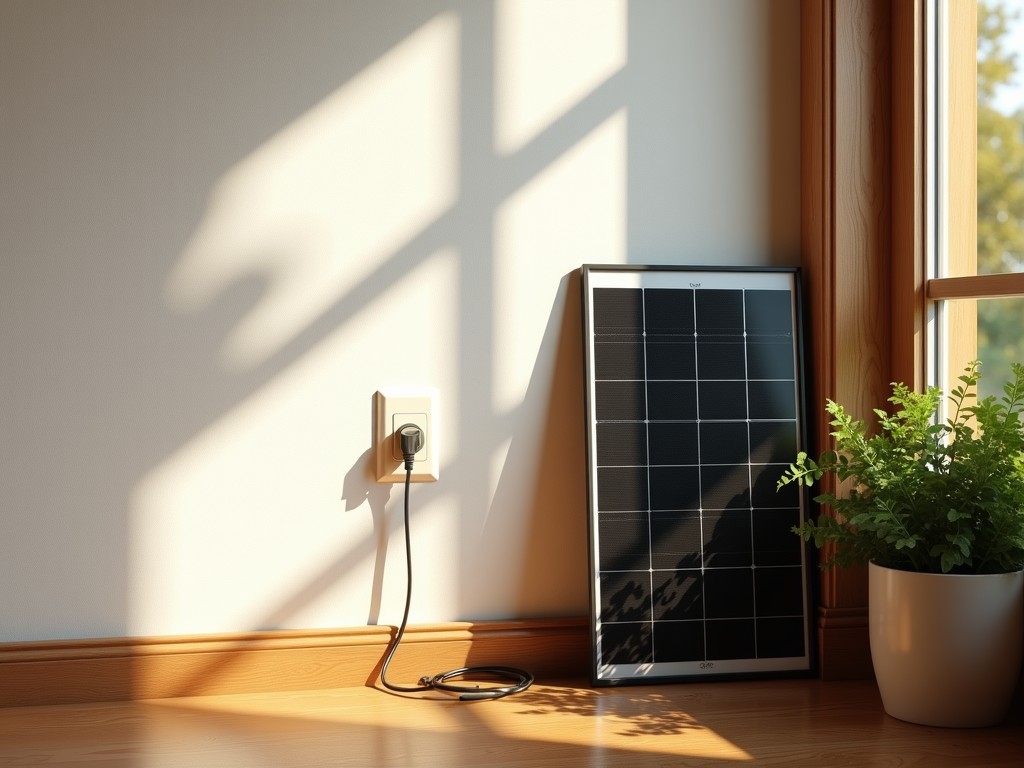
Illustration generated for Thicket Guides.
The timing of this warning is critical. Updated legislation coming into force on 27 August 2026 will allow major retailers, including B&Q and Amazon, to sell plug-in solar panels to the UK public for the first time (Ideal Home, 2026). For the renter in a city flat or the owner of a modest terrace, the allure of a "plug-and-play" energy solution is immense. It promises a democratic shift in power, moving the ability to generate electricity away from the landed gentry with south-facing roofs and into the hands of the urban dweller.
But we must distinguish between a poetic gesture of sustainability and a practical financial strategy. A plug-in panel is a delicate, artisanal addition to a home, but it is not a shield against the energy price cap.
The danger lies in how we perceive these devices. When we see images of the German *Balkonkraftwerk*—those neat, dark rectangles clinging to apartment balconies—our minds leap to a conclusion of effortless saving. We focus on the ease of the installation and the novelty of the tech, while the boring, systemic realities of the UK grid fade into the background.
Imagine a reader who spends £100 a month on electricity. They see a plug-in panel and envision that total dropping significantly. However, they overlook that perhaps £30 of that monthly bill is a fixed standing charge—a fee paid simply for the privilege of being connected to the grid. No matter how many watts a balcony panel produces, that £30 remains untouched. The reader is seduced by the visible solution and ignores the invisible baseline. This is the availability heuristic in action: the most vivid piece of information—the "easy" plug-in panel—dominates the decision, while the base-rate reality of fixed costs and dismal winter sunlight is discarded.
The stakes are not merely financial; they are thermal. To spend several hundred pounds on a device that shaves a few pence off a daily bill while living in a home with drafty windows and thin walls is a strategic error. A home that leaks heat is like a bucket with a hole in the bottom; it does not matter how fast you pour electricity into it if the warmth vanishes through the masonry.
True energy independence is found in the tactile, often invisible work of the home. It is found in the density of the loft insulation and the airtightness of a window frame. These are the interventions that provide a permanent reduction in kwh demand. A plug-in panel is a garnish; insulation is the main course.
For those who still wish to explore the solar route, the transition must be methodical. One does not simply plug in a panel and expect the bills to vanish. Without battery storage, the energy generated at noon is wasted if the household is empty until 6 PM. To avoid the trap of the "novelty purchase," a homeowner should follow a rigorous audit of their own space.
1. Download your last three months of energy bills and isolate the standing charge cost. This figure represents the minimum daily overhead that no amount of plug-in solar can eliminate; if this cost is high, your ROI on solar will be significantly delayed. 2. Check your home's EPC (Energy Performance Certificate) to identify if your u-value is poor in the loft or walls. If the certificate reveals significant heat loss, investing in insulation will almost always yield a higher return on investment than a plug-in panel. 3. Use a smart meter to track your peak kwh usage in the evening. By understanding exactly when you consume the most power, you can calculate the precise capacity of battery storage required to make a plug-in system viable, rather than relying on a system that feeds the grid for free while you sit in the dark.
There is a certain charm to the idea of a balcony power plant. It feels like a piece of a future where we are all small-scale artisans of our own energy. But we must not let the aesthetic of the "green gadget" distract us from the physics of the home. Buying a plug-in panel before fixing a drafty room is like buying a designer silk scarf to wear in a blizzard; it is a lovely accessory, but it will not keep you warm.
The goal should be a home that is fundamentally efficient, a sanctuary that holds its heat with a quiet, stubborn persistence. Only once the envelope of the building is secure does the addition of solar technology become a meaningful step toward independence. Until then, let us prioritise the fabric of the home over the novelty of the plug.
Sources — every figure above traces to one of these (1)
This article is general information about UK personal finance, not financial advice. Figures are accurate as of the date shown and may change. Always check the primary source before acting.